
At a Glance
A Saint for Our Time
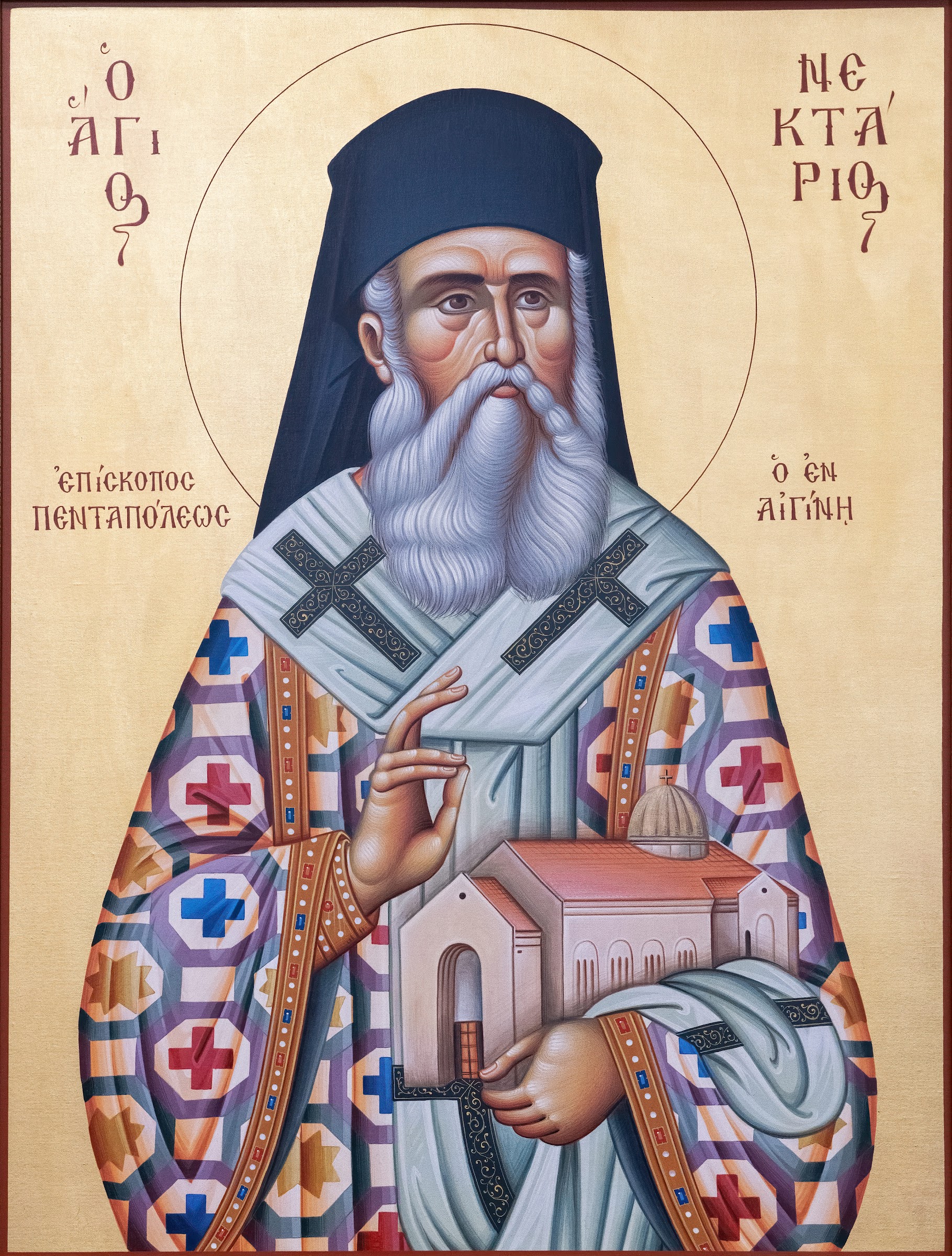
Saint Nectarios grew up in a faithful family of modest means. He loved prayer, Scripture and learning, and as a young man worked his way through school in Constantinople.
In 1876 he became a monk on the island of Chios, taking the name Lazarus, and was ordained a deacon the next year with the name Nectarios. After theological studies in Athens he served the Church of Alexandria as priest, archimandrite and finally Metropolitan of Pentapolis.
His gifts and popularity stirred jealousy. False accusations led to his removal from Egypt. He endured the injustice without bitterness, refused revenge and kept serving wherever God placed him.
The Journey of Saint Nectarios
From Thrace to Constantinople, Chios, Alexandria, Athens and finally Aegina.
1846
Selyvria, Thrace
Born on October 1 and raised in the Orthodox faith in a family of modest means.
1876–1877
Chios
Becomes a monk, then is ordained a deacon with the name Nectarios.
1886–1889
Alexandria
Ordained a priest, then consecrated Metropolitan of Pentapolis.
1890
Slander and Exile
Falsely accused and removed from his duties, he forgives his accusers and keeps serving.
1891–1908
Athens
Preacher, then dean of the Rizarios Ecclesiastical School, forming a generation of clergy.
1904–1920
Aegina
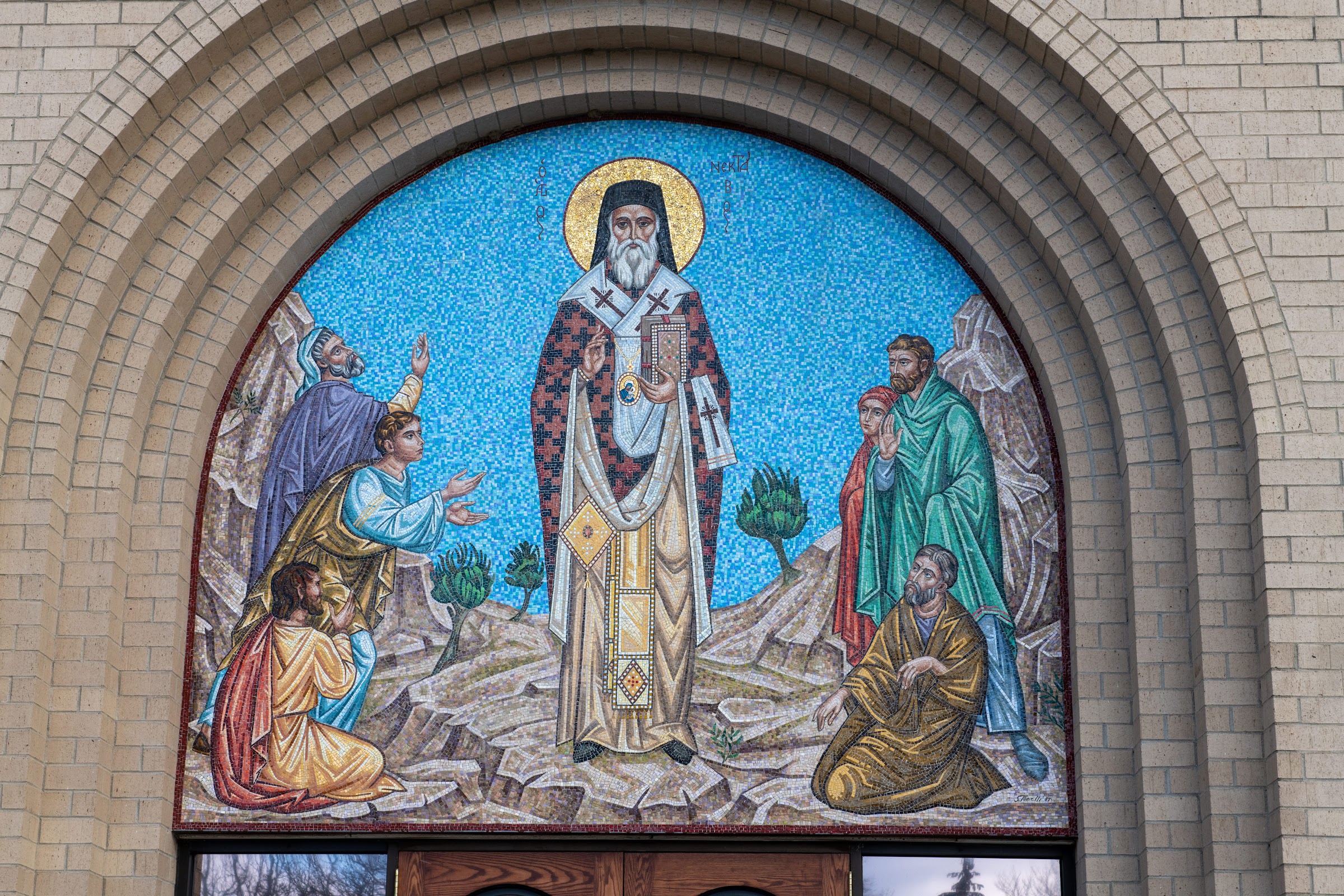
Founds the Holy Trinity Monastery and becomes a spiritual father to the island.
1920 · 1961
Repose and Glorification
Reposes in 1920 and is recognized among the saints in 1961. His feast is November 9.
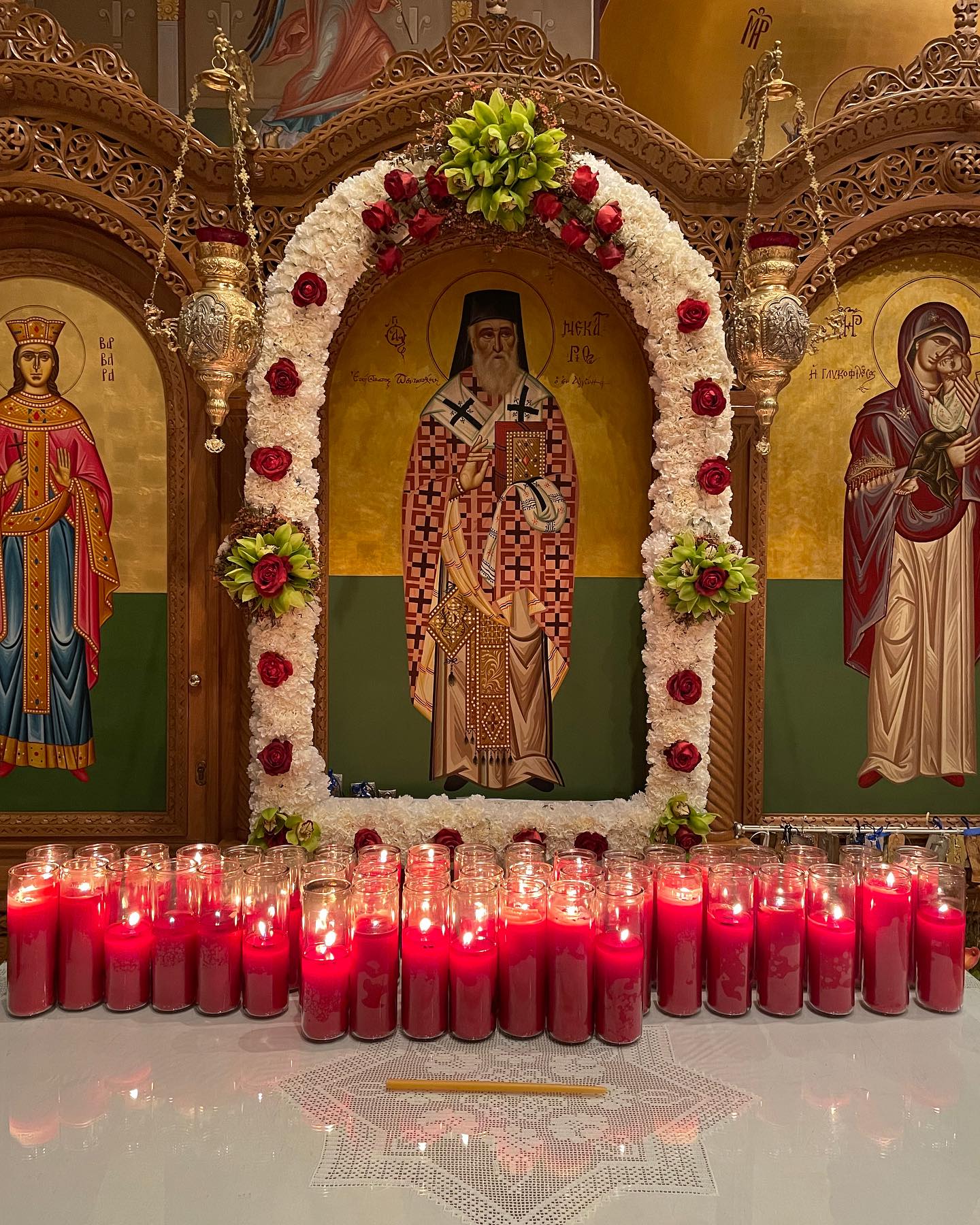
Slander, Exile and the Power of Forgiveness
In 1890, jealousy and false accusations removed Saint Nectarios from his duties in Alexandria. He arrived in Greece with few resources and a damaged reputation.
He did not let injustice harden his heart. He forgave his accusers, prayed for them and kept working for the Church. Holiness, his life teaches, shows itself not only in what we accomplish but in how we meet rejection and pain.
Aegina and the Holy Trinity Monastery
While dean of the Rizarios School, Saint Nectarios began a women’s monastery dedicated to the Holy Trinity on Aegina, and later made the island his home.
There he was teacher, confessor, spiritual father and laborer, building the monastery with his own hands and caring for the people of the island. He reposed in 1920 and was buried at the monastery, which remains a major place of pilgrimage.
His Ministry and Legacy
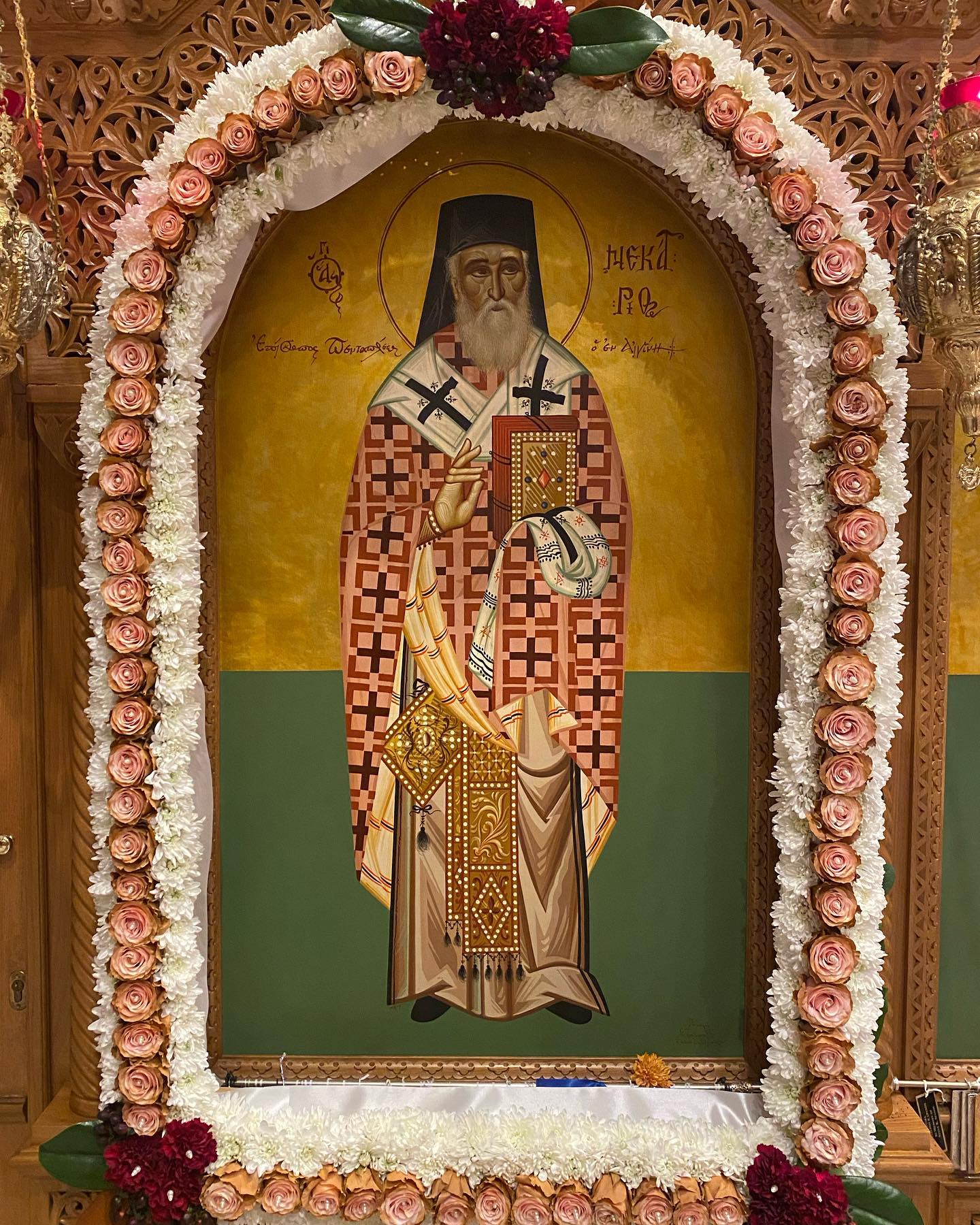
Our Parish and Its Patron Saint
St. Nectarios in Palatine is honored to bear his name. At our Golden Jubilee in 2024, Archbishop Elpidophoros noted that our community was the first parish in the Greek Orthodox Archdiocese of America named for Saint Nectarios.
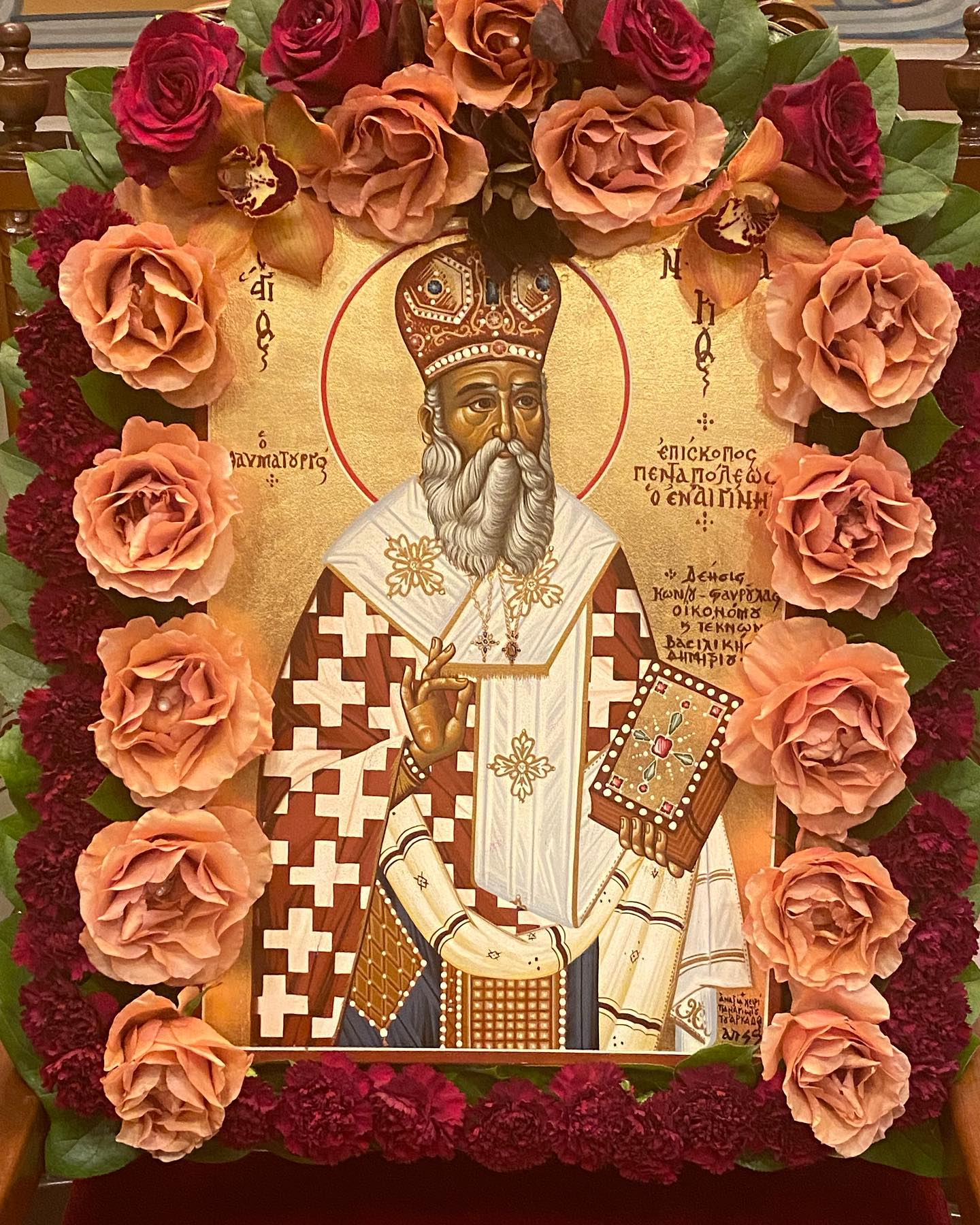
He reminds us to stay centered on Christ, to serve with humility, to forgive generously and to care for those who are hurting. Each year we celebrate his feast on November 9 with prayer and thanksgiving.
Saint Nectarios, faithful servant of Christ and wonderworker of Aegina, intercede for us and help us follow Christ with humility, courage and love.
A prayer to our patron